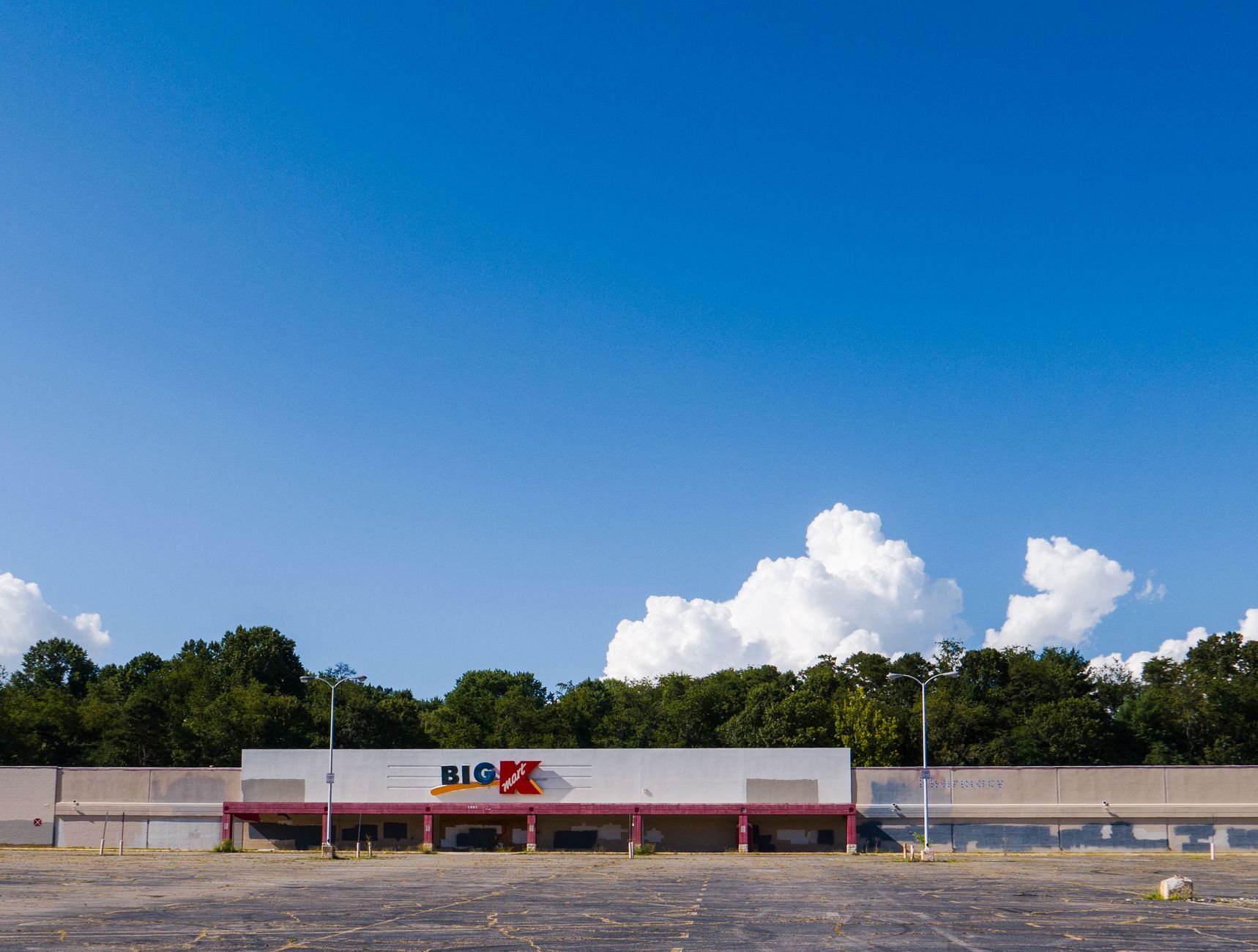
Walk any power center in the Valley right now and you'll spot at least one dark anchor box — a 20,000-to-60,000-square-foot shell that used to anchor the whole center and now sits behind paper on the windows. A few years ago that was a landlord's worst nightmare. Today it's often the best deal in the portfolio.
I've spent the last decade walking Arizona shopping centers, and the anchor boxes that scared owners in 2015 or 2020 are the ones generating the most creative leasing activity in 2026. The reason is simple: the tenants who want big space today aren't the tenants who used to want it, and the boxes themselves are more flexible than anyone gave them credit for.
The New Math on Big Box Vacancy
Traditional big-box demand — mid-tier department stores, national office supply chains, general merchandise retailers — has been shrinking for years. But total demand for large-format space hasn't disappeared. It's shifted toward grocery and specialty grocery, off-price apparel, discount concepts, fitness, medical and urgent care, and entertainment uses that need volume and parking. Arizona's population growth keeps feeding all of those categories, which means the boxes aren't obsolete — they're just waiting for the right new user and the right landlord willing to re-engineer the space.
Who's Actually Filling These Boxes
- Grocery and specialty grocery concepts backfilling boxes in the 25,000–45,000 square foot range, especially in infill Phoenix, Tempe and Mesa trade areas
- Discount and off-price retailers absorbing larger footprints at rents well below new construction, which pencils even with modest tenant improvement packages
- Health and wellness users — urgent care, physical therapy, dialysis, dental groups — taking smaller demised sections of former anchors
- Entertainment and experiential operators leasing full boxes for trampoline parks, pickleball, golf simulators, and family entertainment concepts that need ceiling height and parking ratios big boxes already have
What's notable is how many of these deals involve demising the original box into two or three tenants instead of one. A single 50,000-square-foot dark anchor often becomes a 30,000-square-foot grocery or discount user plus two 10,000-square-foot specialty tenants. That's more leasing work and more capital upfront, but it also means three rent rolls instead of one, and three renewal cycles instead of one cliff-edge lease expiration.
Why Landlords Are Winning on Demising
Demising a big box isn't cheap — new storefronts, separated utilities, reconfigured parking and signage all cost real money. But owners who've done it in Arizona centers are generally finding that blended rents on the demised space outperform what a single big-box user would have paid, even after construction costs are amortized. The math works because smaller users pay a premium per square foot for visibility and access that a single anchor tenant never would have negotiated for. It also diversifies tenant risk across a center instead of concentrating it in one credit.
The Capital Stack Behind Backfill
The investors paying attention to this trend aren't just owner-operators — they're value-add buyers specifically targeting centers with a dark or soon-to-expire anchor box, because the basis is lower and the upside from a successful backfill or demising plan is substantial. Lenders have gotten more comfortable underwriting these deals too, provided there's a credible leasing plan and a broker team that can show realistic tenant demand rather than a hopeful pro forma. Municipal cooperation across Scottsdale, Phoenix, Chandler and Mesa on parking ratio flexibility and reuse permitting has also made these projects move faster than they would have five years ago.
What This Means for 2027
If you own a center with a dark or soft anchor, the worst move is waiting for a like-for-like replacement tenant that may never materialize. The better move is running a real demising and reuse analysis now, while construction costs and tenant demand are both favorable. For investors, centers with backfill upside remain one of the few corners of Arizona retail where basis and rent growth still point the same direction. The big box isn't a liability anymore — it's a blank canvas, and the owners willing to repaint it are the ones capturing the value everyone else is still waiting around for.
