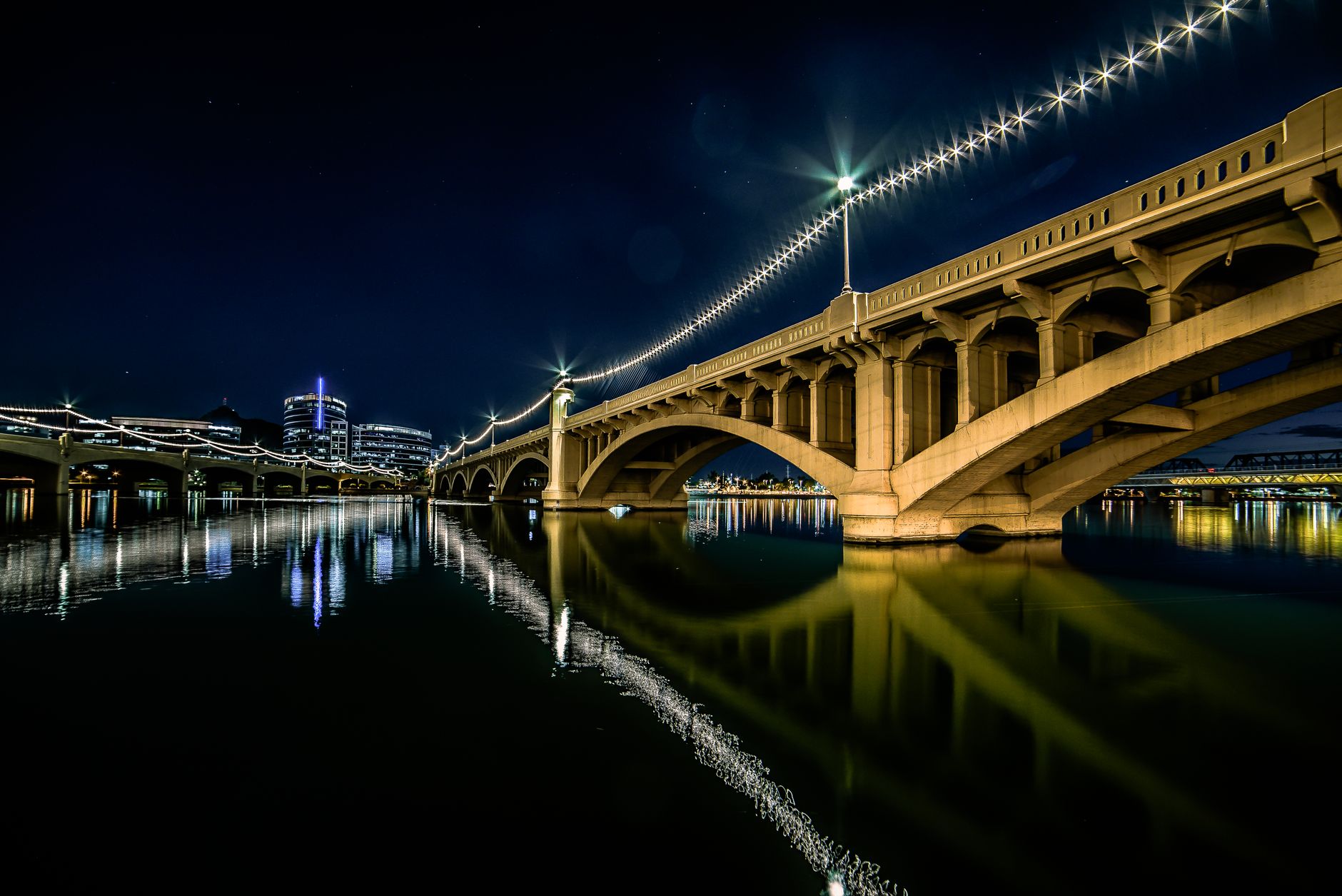
Tempe doesn't behave like the rest of the Valley, and that's exactly why it deserves its own conversation. Drive five minutes from Scottsdale Fashion Square to Mill Avenue and you leave car-dependent retail behind for something closer to a college-town main street stitched to a light rail line. That combination — student density plus transit-oriented development — is producing leasing dynamics I don't see anywhere else in Maricopa County.
Arizona State University anchors more than a campus here; it anchors a consumption pattern. Tens of thousands of students, faculty, and staff move through a compact footprint daily, many without cars, most within walking or biking distance of retail. Layer in the Valley Metro Rail corridor running through Tempe and connecting to Phoenix and Mesa, and you get a submarket where foot traffic isn't seasonal or event-driven — it's structural, tied to the academic calendar and rail ridership rather than freeway visibility.
Why TOD Retail Behaves Differently
Traditional Phoenix-metro retail underwriting leans hard on drive-time counts and arterial visibility. Tempe's transit-adjacent nodes flip that model. Ground-floor space near rail stops competes less on parking ratio and more on frontage activation, sidewalk presence, and hours that match a 24-hour, walk-up population. Landlords who still evaluate these deals with suburban strip-center logic are underpricing the real driver of value: pedestrian throughput within a quarter-mile radius of a station.
What's Actually Leasing
Food and beverage concepts built for quick turns and late hours continue to outperform in the Mill Avenue and Rio Salado corridors. Service-based tenants — fitness, personal care, tutoring, mobile phone repair — do well because they capture repeat student visits rather than one-time destination trips. Formats that struggle are the ones requiring a big box footprint or heavy parking allocation; those tenants are better suited to Tempe Marketplace or the power centers along Southern and McClintock, where the trade area is still car-centric even though it's minutes away from the transit core.
The Investment Angle
Cap rates on well-located Tempe TOD retail have compressed relative to broader Phoenix-metro retail, and that's not irrational — it reflects a smaller, more defensible supply set. There's a hard ceiling on how much new ground-floor retail can be built adjacent to existing rail stops without significant redevelopment, which keeps competitive supply in check even as demand from both national and independent operators grows. Investors chasing yield alone will find better numbers in Mesa or the West Valley; investors chasing durability and re-leasing velocity should be looking harder at Tempe.
Where the Friction Points Are
- Parking mismatch — many older Tempe retail buildings were built before TOD assumptions, leaving landlords torn between preserving parking ratios and activating street frontage
- Seasonal vacancy risk — summer session enrollment drops can soften traffic for tenants overly reliant on the academic calendar without a broader resident or employee base
- Rent expectations outpacing comps — some landlords are pricing off Mill Avenue's best blocks and applying that to secondary corridors that don't have the same rail proximity or foot traffic
None of these are dealbreakers, but they're the questions I ask before writing a proposal in this submarket. A tenant rep client evaluating a Tempe location needs a walk score and a rail-proximity map as much as a traffic count. A landlord repositioning a Tempe asset needs to think about activation hours and street presence, not just NNN structure and term length. Tempe rewards operators who understand that the audience here moves on foot and on rail — and it punishes anyone still leasing this submarket like it's a stretch of Bell Road.
